Sports Commodification In Boston Part 1: The Rise Of The Sports Commodity - From Billboards To ‘Brought To You By’
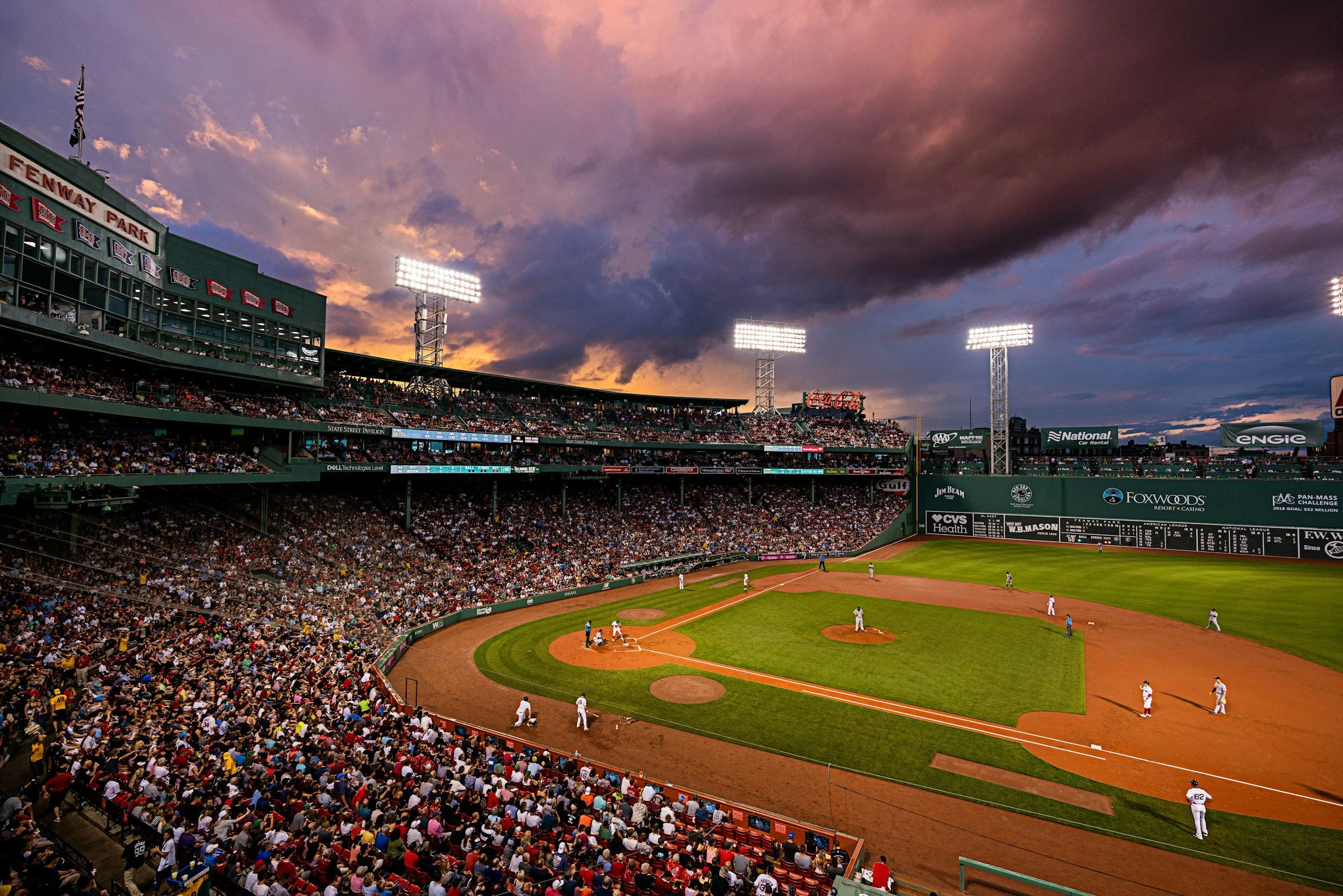
A view of Fenway Park in Boston, the home of the Boston Red Sox since 1912 - image provided by Squarespace
To go to a baseball game in 1975, you bought tickets at the venue, grabbed concessions, went to your seat, and watched the game. Today, fans buy tickets online, pay for parking, walk in, purchase overpriced concessions, get bombarded with in-stadium advertising, and watch the game. That’s if fans can afford to go to a game at all.
The route to the sports fan experience has changed drastically in the past 50-plus years. This change in the fan experience exemplifies the phenomenon of commodification — the process of turning something into a product to be bought or sold. In the sports landscape, it refers to a game being treated as a commodity rather than just as entertainment for fans.
“[Commodification] has affected me greatly,” said Dr. Charles Steinberg, current President of the Worcester Red Sox, the Triple-A affiliate of the Boston Red Sox. “There was a time in 2007 at the Red Sox, where I felt like there was a dollar sign attached to every message we were putting out, and it seemed that only the messages with dollar signs were being valued more.”
Steinberg previously worked in public relations and front offices for four Major League Baseball teams starting in 1976: Baltimore Orioles, San Diego Padres, Boston Red Sox, and Los Angeles Dodgers. He attributes the rise of sports commodification to the invention of free agency, where players with expired contracts can sign with other teams, a development that began in MLB.
Team owners controlled payroll from baseball’s inception until the 1970s. Included in every player contract was the reserve clause, which gave the organization the right to renew the same deal for one year. This meant players were bound to clubs for eternity unless they were traded or released.
The Major League Baseball Players Association, created in 1966, filed a grievance about this clause in October 1975. In December the same year, arbitrator Peter Seitz ruled that players had the right to leave a club if they didn’t sign with them in their last year. This ruling allowed players to become free agents after six years of MLB service, and owners were willing to spend heavily to acquire the best players on the market.
Looking at the four major Boston sports teams, player payroll has increased significantly, even over the past 25 years, when free agency was implemented.
Sports teams had to offset rising payroll costs due to free agents, so they created new revenue streams.
“You can only charge so much for tickets,” Steinberg said. “That is where corporate partnerships came in, where rights fees from television rights holders and radio rights holders went up, where merchandise became a lot more sophisticated.”
Using these new methods of accruing income, teams in the Boston area, ranked the best sports city by WalletHub in 2026, have doubled, tripled, or even made five times their revenue 25 years ago. The only outlier is 2020, when all sports were impacted by the COVID-19 pandemic and lockdown.
Even taking into account the expenses of operating a sports franchise, Boston teams are mostly profitable. Since 2011, the four major Boston sports teams have made a profit, except during the aforementioned 2020 season. No team lost more than 20 million dollars between 2002 and 2010.
Dr. Lauren Anderson, a sports communications professor at Emerson College, also attributes the rise in sports commodification to increased television viewership.
“TV has played a role. Because you think about sports just for fun, a family outing where you go to the ballpark, and then once it starts becoming on TV, it becomes heavily commercialized,” Anderson said. Advertising and sponsorships took off with television, and their presence increased further with digital technology and streaming services.
Steinberg remembers witnessing the rise of commodification firsthand while working at the Baltimore Orioles. When the team was sold to Edward Bennett Williams in 1980, he and his right-hand man, Larry Lucchino, made several changes to the organization.
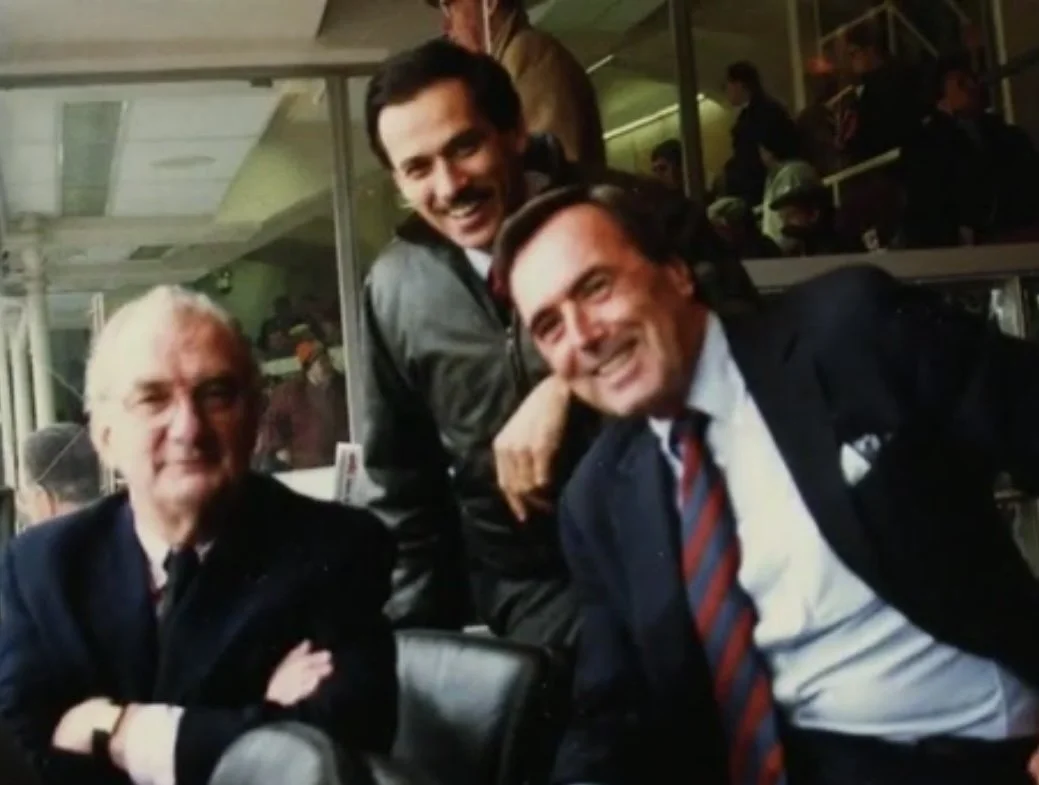
Baltimore Orioles Owner Edward Bennett Williams (left) and President Larry Lucchino (center) in the owner’s suite during a game at Baltimore Memorial Stadium in the 1980s - courtesy of Dr. Charles Steinberg
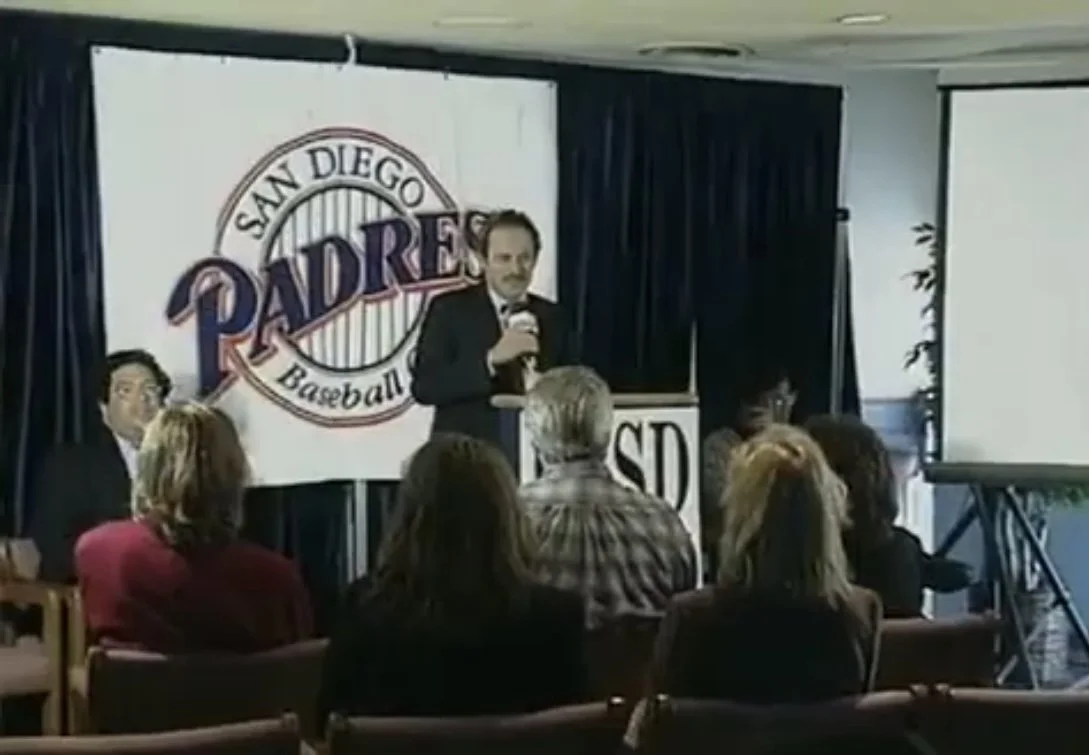
President and CEO, Larry Lucchino (at podium), and Executive Vice President, Dr. Charles Steinberg (seated behind facing camera), address the media at a press conference for the San Diego Padres in 1997 - courtesy of Dr. Charles Steinberg
One of the changes was utilizing an empty spot in right field behind the bullpen at Baltimore Memorial Stadium, the previous home of the Orioles. The team set up tables and offered fans the opportunity to have a picnic before the game.
“You get there earlier, so that takes parking out of the equation as a stress, and you have your hot dogs, hamburgers, and french fries, and you’re all together,” Dr. Steinberg said. “But you’ll pay money in addition to your ticket because you’re receiving an experience in addition to the ball game.”
Lucchino, who later became President of the Boston Red Sox, also changed the concept of the Orioles ballpark advertisements in 1980. At Baltimore Memorial Stadium, the city of Baltimore owned the stadium and sold the advertising signs, with the team renting out the space. Williams and Lucchino agreed to a deal where the team sold the signs and paid the city its usual cut, but the Orioles kept the remaining profit.
“You say to a business, ‘we’ll not only give you a sign, but the owner of your company will throw a ceremonial first pitch before a game,’” Dr. Steinberg explained. “Suddenly, you’ve gone from the commodity of signage to the romance of partnership. That is where corporate partnerships…ignited and soared like a rocket to outer space.”
Combined with profits from these corporate sponsorships, media rights deals, merchandising, and other income, the franchise values of Boston’s four core teams have skyrocketed by an average of 1,500 percent from 2002 to 2025.
Even with franchises now valued in the billions, teams and leagues are still looking for ways to make more money. Dr. Anderson pointed out that the National Football League (NFL) has expanded globally with regular-season games in Europe, and that this is a new step in the commodification of sports. NFL commissioner Roger Goodell has stated he wants even more international games each season to increase the league’s revenue even more.
As for the reason teams, leagues, and media companies are looking for more money, Dr. Anderson attributes it to simple greed.
“Why not make more money? Why not advertise, get sponsorships for everything, and have product placement everywhere?” Anderson posed. “Because we can; because we can make more money.”
Parts Two and Three examines how the self-interest of teams and media companies affects Boston sports fans, both for in-person tickets and for watching games online.
