Is FIFA Immune To Controversy?
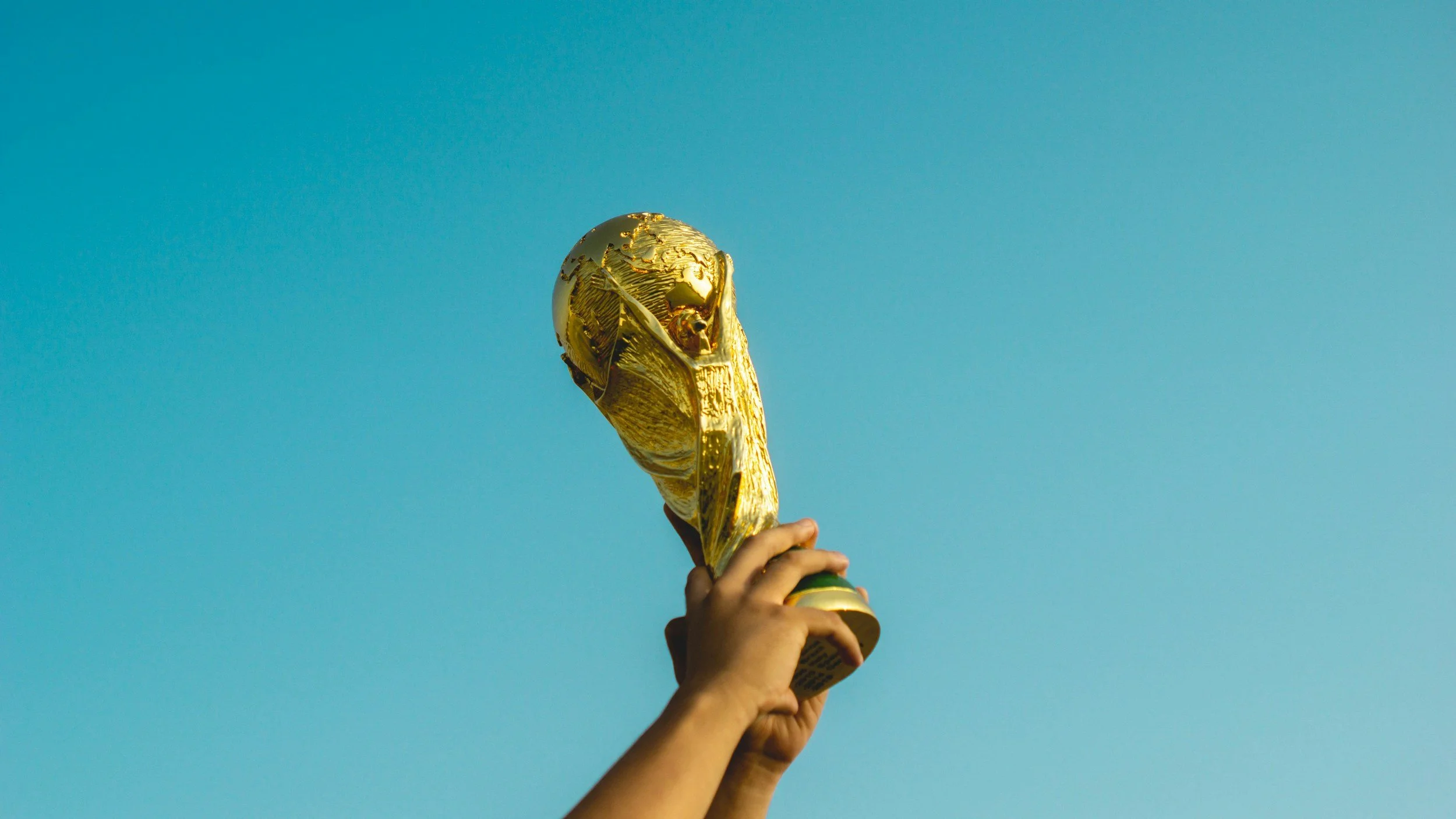
A picture of the FIFA World Cup Trophy - courtesy of Squarespace
To say that the 2026 FIFA World Cup is controversial would be an understatement.
I don’t think I’ve seen as many news articles and public discourse surrounding the tournament in my life. Granted, I am only twenty-two, but it’s still damning.
I have several memories of past World Cups: watching the 2014 Final at the only bar in Castine, Maine, while on vacation with my family, seeing the rise of Kylian Mbappe and England finally winning a penalty shootout in 2018, and my mother knocking over a lamp at my grandparents’ house after Messi’s extra time goal in the 2022 World Cup Final - breaking it.
The World Cup has been exciting for me as a soccer fan, but I’m not as invested this year. There are too many problems surrounding it that can’t be ignored:
The weather is too hot, and reusable water bottles are banned from stadiums; plastic water bottles are allowed
Some national teams need special visas to enter the United States
Iran’s status in the tournament and in the U.S., as several staff members were denied entry permits
Climate emissions with the expanded 48-team system
Police brutality in the U.S. and police presence at stadiums
Violence in Jalisco after the death of Jalisco New Generation Cartel leader Nemesio Oseguera
An Iraqi player was detained and questioned for 7 hours before entering the U.S.; ICE denied entry to Iraq’s team photographer
Tickets cost an insane amount of money
A Somali referee for the World Cup was denied entry into the U.S.
FIFA President Gianni Infantino’s coziness with President Donald Trump, even awarding him the inaugural FIFA Peace Prize
Labor rights violations in Mexico during renovations of Estadio Azteca
Protests surrounding the gentrification of Mexico City and social security reforms before the first game
The town of Foxborough, Massachusetts, refused FIFA’s entertainment license because it wouldn’t pay security costs; Gillette Stadium owner Robert Kraft ended up paying the $7.8 million cost
Unusually strict security checks for the Senegal and Uzbekistan national teams when they entered the U.S.
Lack of public transit access, especially to the World Cup Final host MetLife Stadium in East Rutherford, New Jersey (Please don’t walk on I-95. It is a literal highway)
It got me thinking about whether FIFA ever faced this much controversy before. Since my World Cup knowledge only dates back to 2014, I only remember the host selection corruption case and the conditions of migrant workers in Qatar.
For this, I won’t be focusing on on-pitch incidents involving players such as “The Hand of God” or “The Battle of Nuremberg.”
2015 Corruption Cases
This is by far the most well-known of FIFA’s scandals. Fourteen individuals associated with FIFA, CONMEBOL (South America’s football confederation), CONCACAF (Caribbean, Central, and North America’s football confederation), and corporate executives were indicted in the United States. The charges included wire fraud, racketeering, and money laundering.
Officials from FIFA, CONMEBOL, and CONCACAF colluded with sports marketing executives regarding the media rights of international soccer tournaments. A separate investigation by Swiss authorities revealed several FIFA officials took bribes to award the 2018 and 2022 World Cups to Russia and Qatar, respectively. FIFA president Sepp Blatter resigned as a result of the scandal.
In an article by The Guardian that I linked above, it stated that 16 of the 22 voting members for the 2018 and 2022 World Cup bids were investigated, and some were implicated for corruption. Current FIFA president Gianni Infantino replaced Blatter in 2016, allowing Russia and Qatar to host their World Cups. But those came with their own controversies.
Russia Hosting In 2018
There were calls to relocate the World Cup from Russia for separate reasons besides the corruption case.
When Russia annexed Crimea from Ukraine, this led to calls from U.S. and U.K. officials to move the game elsewhere. German lawmakers did the same after pro-Russian rebels shot down Malaysia Airlines flight MH17 above Ukraine. LGBTQ+ activists in the U.S. and the U.K. also called for FIFA to ban Russia from hosting after it passed an anti-gay law. All three of these occurred in 2014 and Sepp Blatter declined to move the tournament.
Just before the tournament, the British government announced that ministers and the royal family would not attend the games in Russia. This came after a Russian ex-spy and his daughter were poisoned in Salisbury, United Kingdom by Russian agents.
Qatar Hosting In 2022
In the same vein, let’s travel about 3,500 miles south.
Human rights abuses were the main story leading up to the 2022 tournament. The Guardian reported that 6,500 migrant workers died while building stadiums and infrastructure for the World Cup. FIFA and Qatar disagreed with the findings, saying only three people died. Also, Qatar’s ban on homosexuality worried LGBTQ+ fans attending the tournament. Several musicians declined performance offers from FIFA due to human rights violations.
Another problem was the irregular schedule. Instead of taking place in the summer, the World Cup kicked off in November and December due to the heat in Qatar’s summer. This came with considerable scrutiny from European domestic leagues and Australia’s domestic league due to the disruption to club football schedules, but I think player safety takes precedence over billion-dollar television deals.
Rainbow Armbands Ban
The captains of seven European countries wanted to wear anti-discrimination rainbow arm bands during the 2022 World Cup in Qatar. FIFA threatened the players with yellow cards if they did so and the captains backed out. Denmark even considered leaving FIFA due to the incident, although it did not happen.
Iranian Protests
Some Iranian sports personalities asked FIFA to ban Iran from the 2022 tournament due to the violent crackdown during anti-government protests. FIFA denied the request, and Iran participated in the tournament.
However, the players refused to sing the Iranian national anthem during the first game against England. Amid threats from Iran’s government, the Iranian players sang the national anthem at the next two games.
Many Iranian anti-government protesters wearing shirts saying “women, life, freedom” at games were either removed or denied entry. The Welsh government also boycotted the group stage game against Iran. It was revealed after the tournament that Qatar helped silence Iranian protesters at the World Cup.
Referees Against Less Prominent Teams
During the 2006 World Cup in Germany, Australia and Ghana were very vocal about refereeing during their games.
In its match against Croatia, Australia was denied a penalty kick when Croatia’s Josip Šimunić wrestled Mark Viduka to the ground in the box, had the game-winning goal disallowed because referee Graham Poll blew the full-time whistle, and Poll gave Josip Šimunić three yellow cards before sending him off after the final whistle.
Against Japan, referee Essam Abdel-Fatah awarded a goal to Japan despite Japanese player Atsushi Yanagisawa’s collision with Australian goalkeeper Mark Schwarzer during the play. Australia went on to win the game 3-1.
The Ghanaian coach said after the team’s 3-0 defeat to Brazil in the Round of 16 that the referee should have worn a yellow shirt to match the Brazilian uniforms. Referee Ľuboš Micheľ allowed one of Brazil’s goals when it was clearly offside.
Sepp Blatter, FIFA president at the time, complained about the inconsistency in officiating. Several referees were sent home early, including Poll and Valentin Ivanov, who refereed the Battle of Nuremberg.
Poor refereeing was also a talking point during the 2014 World Cup.
Lack Of Video Technology
In 1966, England’s Geoff Hurst scored a goal in extra time of the World Cup Final against Germany that has been disputed to this day. Did the ball cross the line? Did it not?
In 2010, karma came back to bite England - against Germany.
Referees Mauricio Espinosa and Jorge Larrionda disallowed Frank Lampard’s goal in the Round of 16 clash, even though television replays showed the ball went over the line. England lost the game to Germany 4-1. That very same round, another incident occurred when Argentina’s Carlos Tevez’s goal against Mexico was clearly offside, but was awarded.
FIFA had blocked experimenting with technology that March, but was forced to reopen the debate after the 2010 World Cup. FIFA implemented goal-line technology for the 2014 World Cup onwards and Video Assistant Referee in 2018.
Video Assistant Referee
VAR made its debut at the 2018 World Cup after several officiating errors at the previous two tournaments. However, the new technology came with its own problems.
During the final Group B matches, Spain-Morocco and Portugal-Iran, several VAR calls dictated both games ending in ties, advancing Spain and Portugal to the Round of 16. VAR awarded Morocco a penalty near the end of the game, but Morocco was very frustrated when Spain’s originally disallowed goal for offside was given minutes later.
In the other game, Iran also got a late penalty for a handball in the box. However, this was after a lengthy review of a Cristiano Ronaldo foul that was kept as a yellow card instead of a red.
Iran’s coach Carlos Queiroz and Moroccan player Nordin Amrabat voiced their displeasure with VAR after their respective games. Moroccan midfielder Younès Belhanda said that VAR only helps big teams.
ESPN did an article rating the VAR instances throughout the tournament. I counted five instances where ESPN fully disagreed with the decisions, ten that were iffy, and eighteen that they agreed.
The Jabulani
A different ball is used at each World Cup, and there had been complaints from goalkeepers in 2002 and 2006, but Adidas’s Jabulani ball in the 2010 version of the tournament was highly criticized.
Goalkeepers Iker Casillas, David James, Gianluigi Buffon, and Júlio César hated it. Strikers Giampaolo Pazzini, Luís Fabiano, and Lionel Messi hated it. Denmark’s coach, Morten Olsen, and Argentina’s coach, Diego Maradona, hated it. Everybody hated it.
The only person who seemed to like the ball was Uruguay’s Diego Forlán, who won the Golden Ball (best player) and Golden Boot (highest goalscorer) that tournament. Forlán asked Adidas to send him a Jabulani ball three months before the tournament and stayed extra after training at his club, Atlético Madrid, to get used to it.
FIFA acknowledged the complaints, but agreed to discuss them with teams after the World Cup. The ball stayed, and Uruguay made it to the semi-finals behind Forlan’s performance (and a Luis Suárez handball).
Protests In Brazil
Before the 2014 tournament, protests occurred throughout Brazil against the government’s extravagant spending on the World Cup and a lack of funds for low-income housing. Two CNN reporters were injured when police threw a tear gas canister at them while covering a protest in São Paulo.
Similar actions happened when Brazil hosted the 2013 FIFA Confederations Cup. Brazil’s President Dilma Rousseff and FIFA president Sepp Blatter were booed during speeches before the first game between Brazil and Japan. They did not make speeches before the 2014 World Cup.
The protesters were justified in their concerns for the government. Several stadium accidents during the construction of World Cup venues resulted in eight deaths. A monorail and bridge overpass collapsed that summer, killing one and two people, respectively. Twenty-four others were injured in the two incidents.
Head Injuries
Germany’s Christoph Kramer took a blow to his face during the 2014 World Cup Final against Argentina. He played on for 14 more minutes before being subbed off after slumping to the ground. Kramer’s injury, combined with players Álvaro Pereira, Javier Mascherano, and Pablo Zabaleta’s own head-related knocks, highlighted problems with FIFA’s concussion protocol.
FIFA approved concussion substitutes in 2024.
Fair Play Controversy
After the final games in Group H of the 2018 World Cup, Senegal and Japan had the same number of points, goal differential, and goals scored, with one spot remaining in the Round of 16. Japan advanced because of fair play rules.
Wait, what are fair play rules?
Fair play dictates that if two teams are tied on points, goal differential, and goals scored, the team with the lowest amount of bookings advances (yellow and red cards). Japan had three yellow cards to Senegal’s five. After learning Senegal was also losing 1-0 in its final Group H game, Japan played the rest of its match conservatively to avoid goals and bookings.
Senegal complained to FIFA about the fair play rule, but it remains in effect.
The Disgrace Of Gijón
Okay, I know I said earlier that I wouldn’t include on-pitch incidents by players, but this one changed the format of future World Cups.
Group Two in the 1982 World Cup consisted of Austria, Algeria, West Germany, and Chile. After Algeria beat Chile 3-2 in its final Group Stage match, it needed either Austria to win or Germany to win by three goals or more in their match the next day to advance to the Round of 16.
West Germany won 1-0 after a 10th-minute goal from Horst Hrubesch. There was one more shot on goal and barely a resemblance to a good football match afterwards. The result meant that Austria and West Germany advanced, eliminating Albania.
Obviously, Albania was pissed, but so were Austrian and West German fans. Even the commentators from both European countries were upset with their teams’ actions. FIFA rejected Albania’s appeal, but changed the rules so that the final group matches are played simultaneously in future World Cups.
The game took place in Gijón, Spain: hence the name “The Disgrace of Gijón.”
Did Any Of These Controversies Affect FIFA?
The short answer: no
The long answer: also no
While the corruption scandal left a huge stain on FIFA, it did not destroy the company. The corruption case led to the dismissal of some of its highest officials, including Sepp Blatter, but FIFA itself remains, now run by Gianni Infantino and others not involved in the case.
In 2022, FIFA reported that television audiences of 2.87 billion watched for at least one minute, and 2.21 billion watched for twenty minutes or more. The World Cup Final between Argentina and France had a global live audience of 570.8 million viewers. Those are some pretty staggering statistics.
However, the total numbers for the whole tournament dropped from the 2018 edition: 3.26 billion watched for at least one minute, and 2.65 billion watched for twenty minutes or more. The World Cup Final between France and Croatia had 516.6 million viewers, so 2022 had more viewers in this category.
The 2014 Final had 570.1 million viewers, and the 2010 Final had 530.9 million viewers. Numbers have stayed consistent over the past sixteen years, but viewership has grown since the 1954 World Cup in Switzerland introduced television coverage.
Considering the trends of the past sixteen years, I doubt FIFA will have any issues regarding viewership for the 2026 World Cup, despite all the controversy. There could be a slight dip in numbers as there are many more individual scandals than in past tournaments. 2022 had the most controversy previously, and there was a dip in overall numbers, but not enough to warrant trouble for FIFA.
I believe FIFA will remain a global football monopoly for years to come.
