Sports Commodification In Boston Part 2: Priced Out From ‘Play Ball!’ - How Rising Ticket Costs Affect Boston Sports Fans
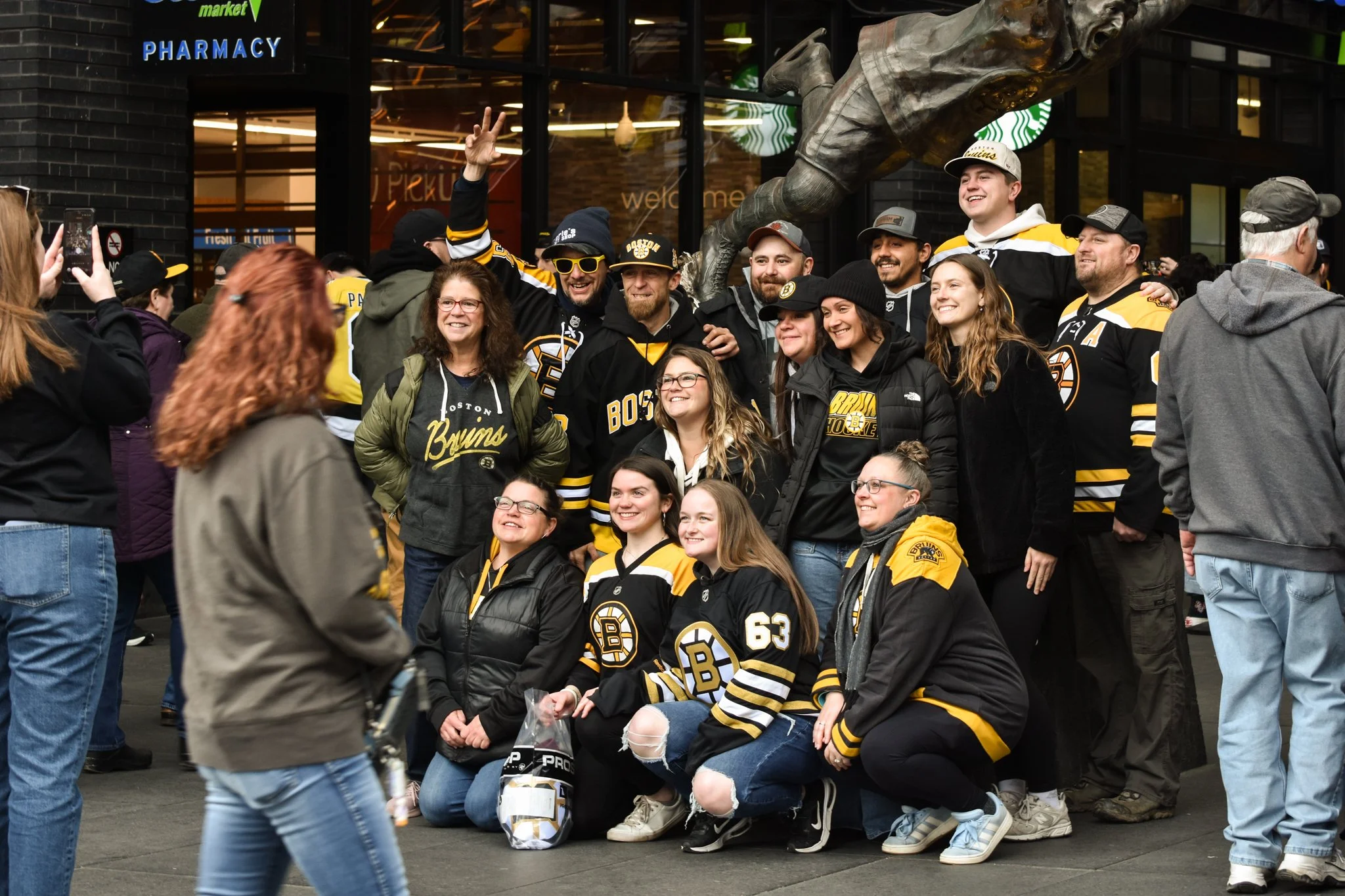
A group of Boston Bruins fans pose in front of the Bobby Orr statue, located just outside the entrance of TD Garden, before a game between the Bruins and the Minnesota Wild on March 28, 2026. The cheapest ticket four hours before game time was $212.50 - Photo by Alex Lott
Boston, Massachusetts. Home of the 18x championship-winning Celtics, 9x World Series champion Red Sox, 6x Stanley Cup winning Bruins, and 6x Super Bowl champion Patriots.
Boston’s sports market has some of the most passionate fans in the United States, spanning generations of families across New England.
“Boston was a city unlike any other,” said Dr. Charles Steinberg, current President of the Worcester Red Sox and former Executive Vice President of the Boston Red Sox. “Aggressive, enthusiastic, passionate, and passionate about their own passion.”
In a city with millions of diehard fans, Boston stands out as one of the fanbases not to piss off. Right now, they are certainly pissed off — about the rising costs of attending a game.
“The first thing for me definitely is the ticket prices, because even getting in the door, I just want to get in…Getting in is the hardest part,” said Boyd Nesta, a college student at Emerson College residing in Boston. “Because as ticket prices go up, it kind of just discourages people from going.”
Kathi Campbell, a retired postal worker who’s lived in Massachusetts her whole life, is one of those fans discouraged from going because of ticket prices.
“As a sports fan, I don’t end up going to any professional games because it has become so unaffordable,” Campbell said. “From parking to concessions to tickets to the whole nine yards.”
Campbell isn’t the only Boston sports fan who’s stopped attending games in-person. Kristin Mawhinney, retired and living on Cape Cod, used to go to Red Sox games a few times per season, but now says she doesn’t attend at all.
Daniel O’Toole, a third-generation Boston sports fan, has seen the increase in prices firsthand throughout his life. He used to go to more games with his family as a kid, but now, at 20, he’s going to fewer.
“You’ll hear a lot of talk about rising ticket prices, but I think that we feel it pretty heavily in Boston because we are such a big sports market,” said O’Toole.
There has been an average increase of 271 percent in the weighted ticket price since 1994. Even adjusting the average price of a game in 1994 with the inflation rate up to twenty years later, the Patriots, Bruins, and Celtics are charging double what the rate of inflation predicts them to.
“I know if I want to go to a Bruins game, it’s going to be a lot more expensive if I go on a weekend,” O’Toole added. “But if I’m going on a Monday night or Tuesday night, tickets are only 40, 50, 60 bucks…Still a lot of money, but you know, in the grand scheme of things, it’s not really.”
Dr. Lauren Anderson, a sports communication professor at Emerson College, notes how high prices are in Boston compared to other cities she’s lived in.
“I think the Red Sox are still pretty accessible, but the Bruins, Celtics, and Patriots are just not accessible for the average middle-class American, which is really sad,” said Dr. Anderson.
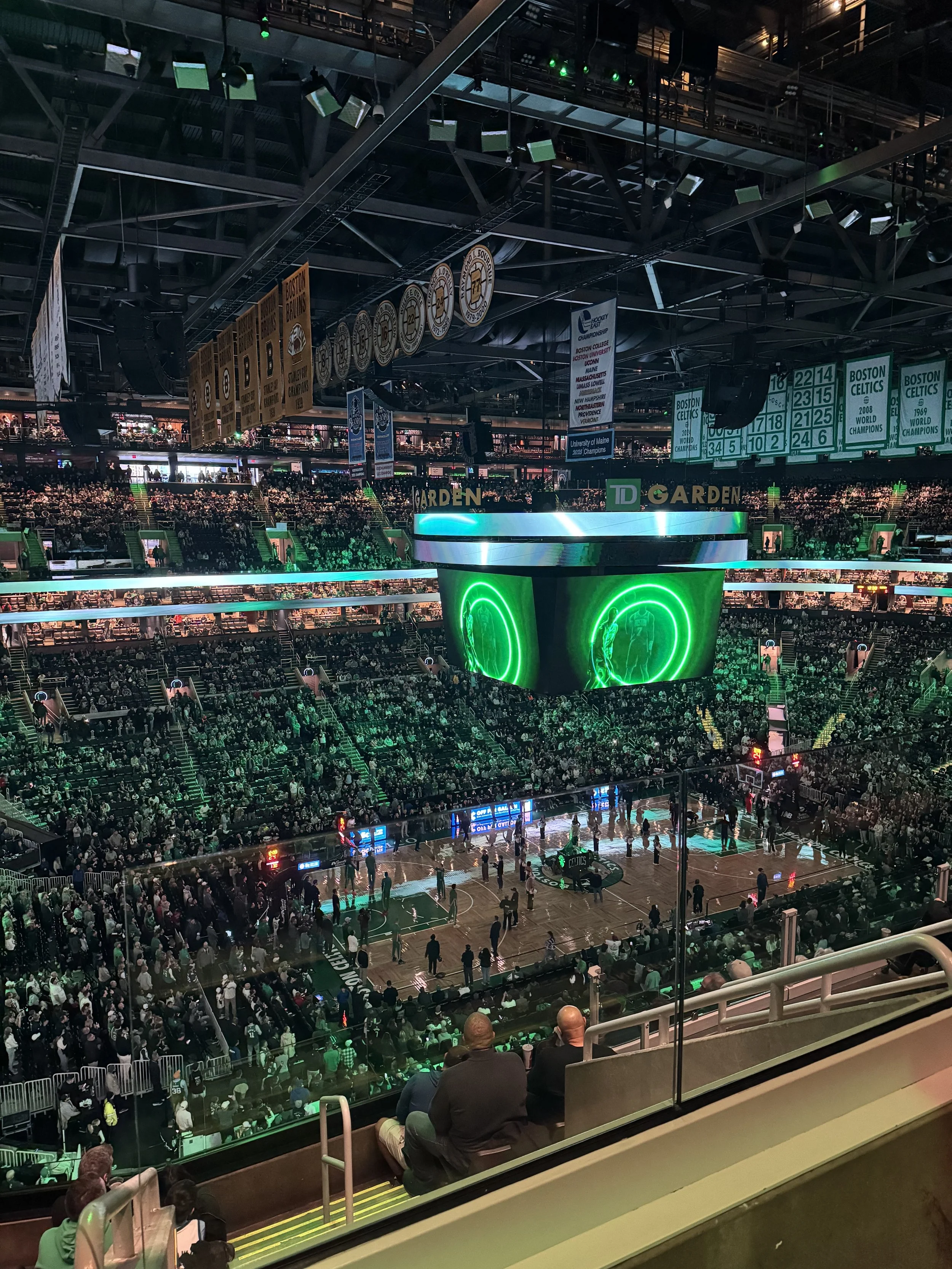
An aerial shot of TD Garden before a Boston Celtics game - courtesy of Daniel O’Toole

Dr. Lauren Anderson (left), her father (right), and current Chicago Bears owner George Halas McCaskey (middle) at the Bears divisional playoff game against the Los Angeles Rams on January 18, 2026 - courtesy of Dr. Lauren Anderson
Dr. Anderson wanted to watch the Colorado Avalanche play the Boston Bruins at TD Garden this past October, but didn’t — because she couldn’t get a ticket under 300 dollars. She also said friends, family members, and her students are complaining about the cost of tickets.
“When I was in high school or college, it would be like, ‘Do you want to go to the Bulls game? Do you want to go to the Cubs game?’ Anderson continued, reflecting on her time growing up in Chicago. “It was just an average weekend activity with your friends, and now it’s something that I hear my students talk about saving up for months in order to go to a game.”
Another way to measure increased prices is the fan cost index. Developed by Team Marketing Report, it calculates the cost for a hypothetical family of four to attend a professional sports game using “four weighted average non-premium tickets combined with the lowest stadium pricing for four sodas, four hot dogs, two beers and two souvenirs (adjustable team hats), along with a nearby parking spot,” according to their website.
The Celtics, Bruins, and Patriots stand out as the most expensive, priced at over three times their 1994 levels. These teams’ fan cost indexes are over 200 dollars above the rate of inflation from 1994 to 2024.
Beth Crouch, an Air Force colonel previously stationed on Cape Cod, primarily watches women’s sports and hasn’t had issues with ticket prices. Women’s sports ticket prices are cheaper in order to fill seats, as they aren’t as popular as men’s yet. Crouch did point out how high other expenses at women’s games are — which the fan cost index does include.
“I attend mostly women’s sports, and the ticket prices haven’t really seemed to have gone up that much,” Crouch said. “Even though the price of the tickets might be low enough for a family to attend, the price of everything is really too much for a family, such as the concessions.”

A couple takes a selfie before entering TD Garden to watch the Boston Bruins take on the Minnesota Wild on March 28, 2026 - Photo by Alex Lott
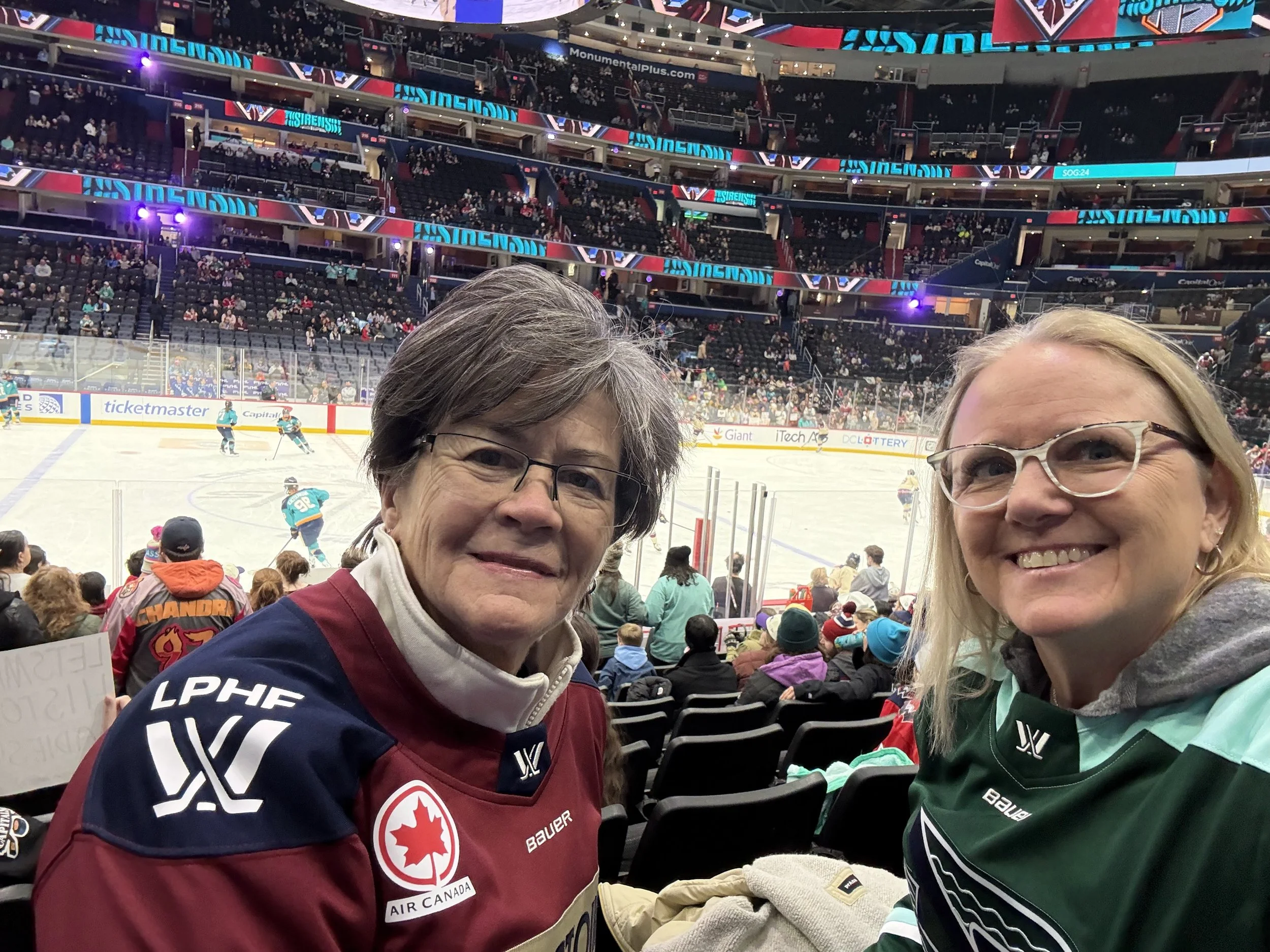
Crouch (right) and a friend (left) at Climate Pledge Arena in Seattle, watching a PWHL game between the Boston Fleet and Seattle Torrent on January 18, 2026 - courtesy of Beth Crouch
Team executives are the ones who decide ticket prices. Dr. Steinberg shared how he and Larry Lucchino approached it when they arrived at the Red Sox in 2002, by raising the cost of box seats closest to the field while lowering bleacher seat prices.
“If you take the high price seats and let the market drive those prices, then you may find you have the wherewithal to artificially keep low the lowest price tickets,” Dr. Steinberg shared. “But if you’ve got a menu of ticket options, it’s like having a shoe store and making sure you’ve got a shoe that fits every size.”
Nowadays, team executives, owners like John Henry of the Red Sox and the Patriots’ Robert Kraft, are raising the prices of all seats. Tom Odjakjian, who used to work for ESPN and The Big East Conference, is baffled by how fans can afford tickets these days, especially the premium seats.
“I don’t know whether everybody makes an exception once a year and says, ‘I’m going to spend all this,’ and the next day, it’s a different group of people,” Odjakjian said. “What we call the Gucci row, the first row at the basketball games, those are the most expensive tickets and they sell first.”
Attendance numbers have been pretty similar over the past 20 years, with a big dip for the Red Sox in 2021 due to the COVID-19 pandemic. Despite the increase in prices, fans are still showing up to watch in-person.
However, Dr. Steinberg explained that teams have to walk a fine line between making money and ensuring all seats are filled in the stadium.
“If you raise your ticket prices higher than the market will accept, then the market is not going to buy those prices, and you may have to bring your price back down,” Dr. Steinberg said. “Knowing your market, knowing your fans is one of the most important parts of running a sports franchise.”
Some fans gave suggestions for the Boston teams to avoid having empty seats. Mawhinney suggested tiered pricing and community service initiatives for older citizens.
“I don’t know if you could pull on the heartstrings of the ownership or if they could do some community service initiatives, at least for older citizens,” Mawhinney said. “Special rates for senior citizens and children, maybe something like that.”
O’Toole is one of the many college students in the Boston area who utilizes ‘Student 9s’, the Boston Red Sox’s program of same-day tickets for college students costing only nine dollars.
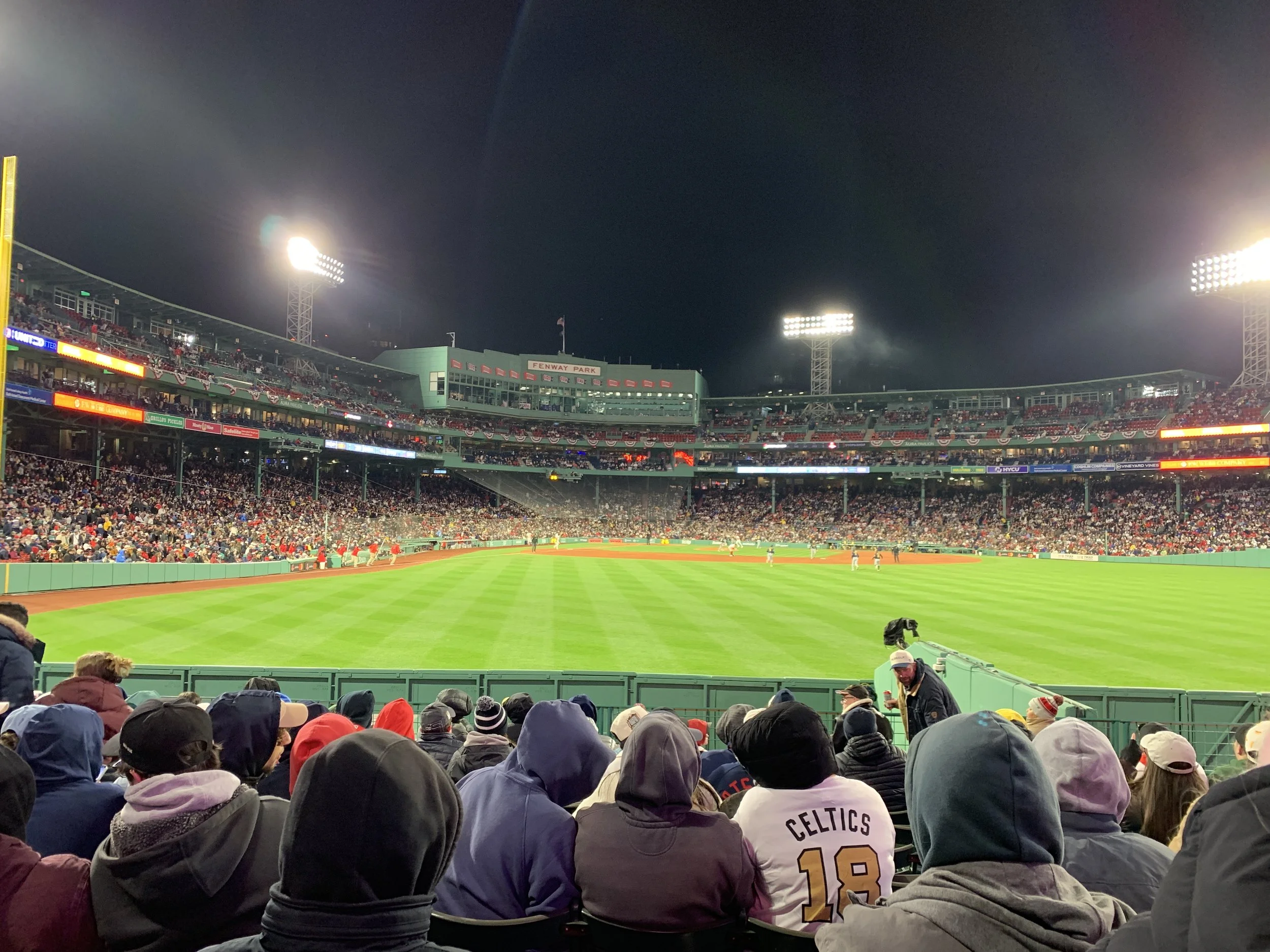
View from bleacher 42 at Fenway Park, a common spot for ‘Student 9s,’ during the Red Sox game against the Milwaukee Brewers on April 6, 2026- Photo by Alex Lott
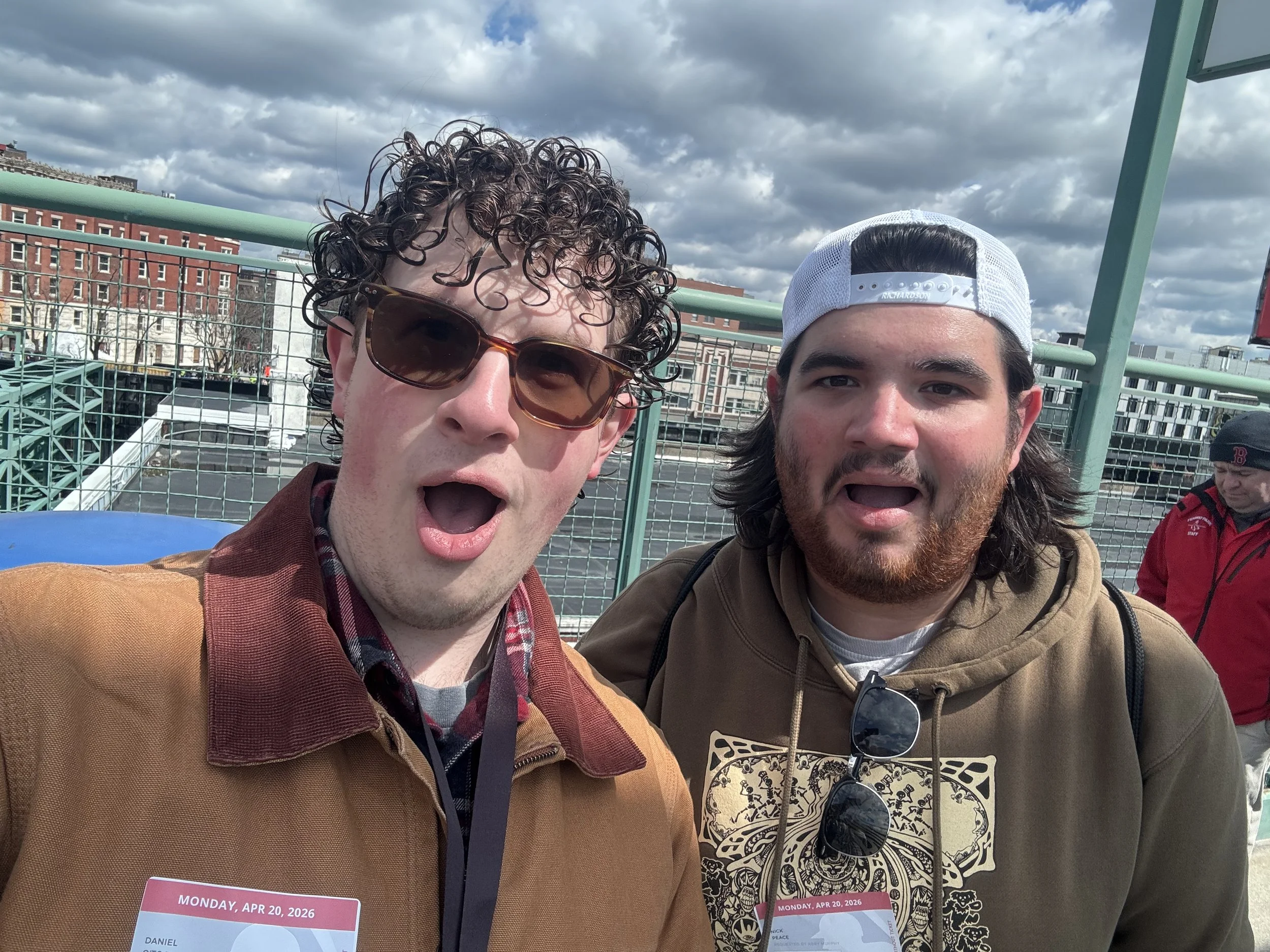
O’Toole (left) and a friend (right) attending a Boston Red Sox game at Fenway Park on April 20, 2026 - courtesy of Daniel O’Toole
“I went to a game and it was Garrett Crochet’s complete game shutout against Tampa Bay. They dropped the code, nine dollars; I went with my brother, and it was such a great game.” O’Toole said. He also hopes the Celtics and Bruins can start similar programs, as they both have 41 home games a season.
Odjakjian’s idea is to pay the players through profits from teams’ gigantic television deals, therefore reducing ticket prices.
“Are they paying the players too much? Yes, but the problem is that the money’s coming in, so they deserve it if that much money is coming in,” Odjakjian said. “You’re making so much from TV, and then accordingly, you wouldn’t have to pay the players as much, you can reduce the tickets and create more fans.”
Dr. Steinberg also talked about whether sports franchise owners are becoming less connected with their fans and are focused more on having a return on their investments.
“Larry Lucchino used to say, ‘We are all fans. We know how we want to be treated. We are fans,’” Dr. Steinberg recalled. “If you stay a fan and stay inside a fan’s soul, you’ll see the organization in a way that gives you an honest portrait. The relationship between a fanbase and a ball club is remarkably fragile. It’s to be treasured, nurtured, enhanced, and protected.”
Part One discusses how sports commodification has reached the point where fans are complaining about ticket prices. Part Three explores the rising costs of the television side of sports viewing, including streaming services and media rights deals.
